The Ocean
How does your personality affect your coping skills? When looking at different types of personality characteristics, something called the Big Five was developed to help understand the different personality types. Dive in to learn more.
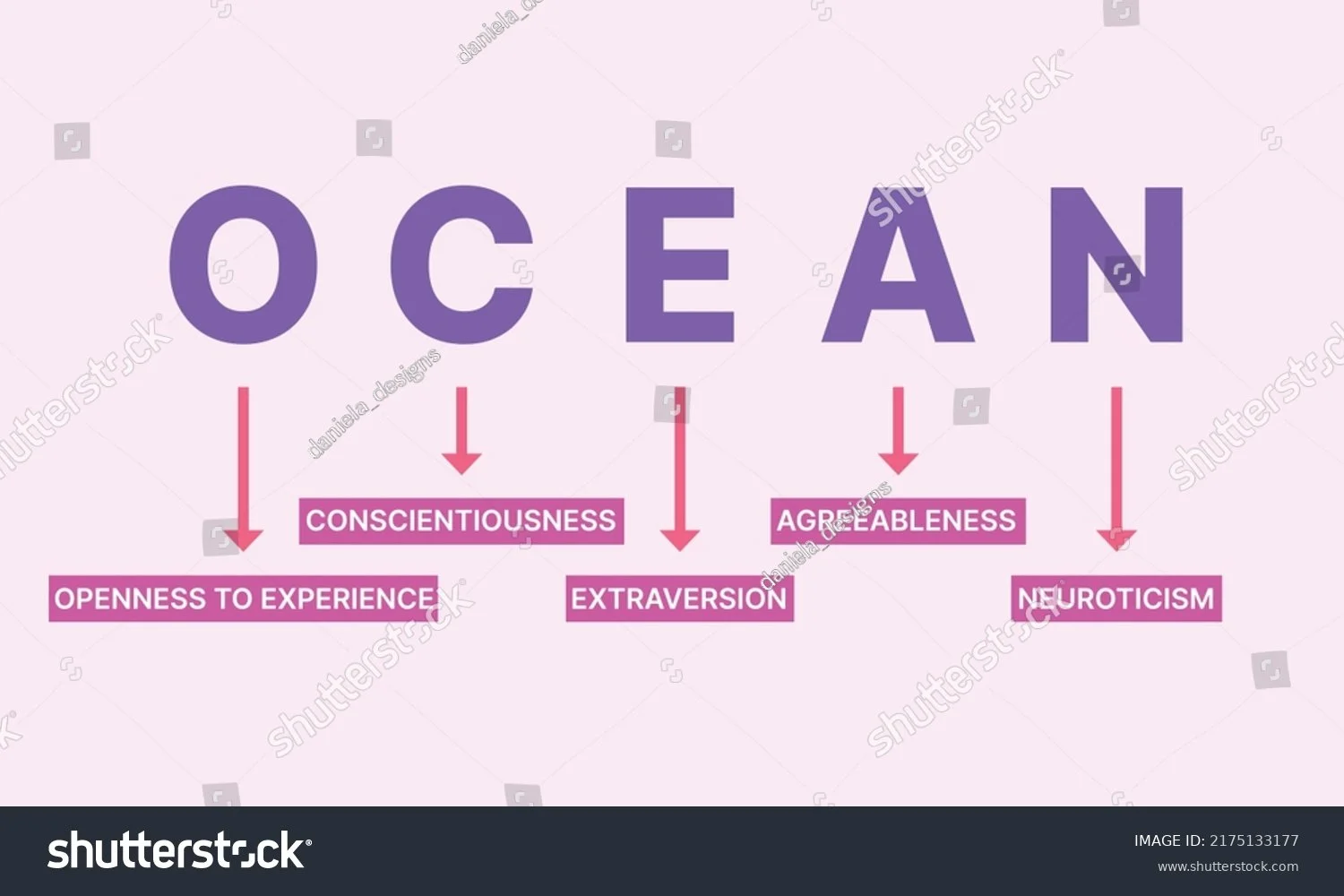
The Ocean:
O = openness to experience
C = conscientiousness
E= extroversion
A= agreeableness
N= neuroticism
These different traits are linked to overall well-being in life, including job performance. Your genes and your environment determine them.
Those high in openness might be more eccentric and have more of a belief in magical thinking. Those low in openness are more closed-minded and rigid in their thinking. People that are high in conscientiousness are known to be workaholics and perfectionists. Those that are low in conscientiousness are easily distracted, irresponsible, and impulsive. Those high in extroversion are thrill seekers and love attention. Those that are low in extroversion appear detached, can be socially withdrawn, and appear cold. Those that are high in agreeableness are selfless, somewhat gullible, and submissive in nature. Those that are low in agreeableness can be manipulative and deceitful. Individuals that are high in neuroticism are vulnerable to depression and feel a lot of shame. The opposite is true for those low in neuroticism. They feel no shame and are fearless.
Openness - Those who are open in nature show intellectual depth and curiosity. They enjoy trying new things, artwork and abstract thinking. Those low in openness are more traditional and practical and love routine.
Conscientiousness- Characteristics include being organized and focused on goals and attention to details. They are also reliable and hard-working types. Those low in conscientiousness are known to procrastinate, however they can be more flexible.
Extraversion- These types have energy. They are talkative and sociable and feel energized by their interaction with others. They are more assertive. The opposite is true for introverts who prefer reflection and are more solitary in nature.
Agreeableness- These types are highly cooperative and compassionate. They are kind, empathic, and helpful, and people you tend to trust. The opposite is true of disagreeable people who are competitive and selfish in nature.
Neuroticism- Highly neurotic types suffer from emotional instability, experience more anxiety and perceived stress. They are highly reactive. The opposite is true of those who are low in neuroticism. They are calm and secure within themselves.
Those who are more open enjoy greater creative thinking, often in science and in the arts. They also tend to have more liberal views. They are higher risk takers in business and entrepreneurial endeavours. Partners on opposite ends of the openness spectrum suffer from more relationship problems. In the workplace they work well individually but not so well on teams. They suffer from less loneliness.
Questions to reflect on:
-Do you like trying new things?
-Do the arts or other creative pursuits interest you?
-How comfortable are you with change?
How do these different characteristics affect your life? Those who are higher in conscientiousness tend to perform better at their jobs. They also tend to live healthier and longer lives following healthier diets. They tend to do better in school and in higher education. Those who are low in conscientiousness were more likely to have problems as youth. Those high in conscientiousness tend to have more financial stability in the short and long term. They are also more likely to enjoy relationship stability.
Some questions to reflect on.
-Are you able to keep your commitments?
-Do you plan ahead or are you more impulsive?
-Is your home and workspace more organized?
-How well are you able to focus on tasks avoiding unnecessary distractions.
Those who are high in extroversion are sociable and more assertive. They are enthusiastic and outgoing in nature. Introverts, on the other hand, are quieter and more reserved. Those high in extroversion often initiate parties and love social gatherings.
Question to reflect on:
-Do you feel recharged by social gatherings or drained?
Those who are agreeable are empathic, cooperative and kind. They are peacekeepers in relationships. Agreeable people are supportive and team oriented. Those who are disagreeable are more competitive. An agreeable person offers emotional support and keeps the peace.
Questions to reflect on:
-Do you keep the peace in your relationships?
Those who are high in neuroticism are on an emotional rollercoaster. They tend to worry and stress out more. They are more likely to experience depression and other medical conditions such as heart disease. Those low in neuroticism are calmer and handle challenges well.
Question to reflect on:
-When problems come up do you face them calmly or do you overreact?
-Do you engage in catastrophic thinking about everything that can go wrong instead of focusing on what can go well?
-Are you able to bounce back after a dissapointment?
If depression or anxiety is bringing you down refer to the OCEAN or CANOE. It can help change your perspective on things.
If you really feel you can’t make it alone, reach out to a qualified therapist and book your session today.
Extroversion-These types have energy. They are talkative and sociable and feel energized by their interaction with others.