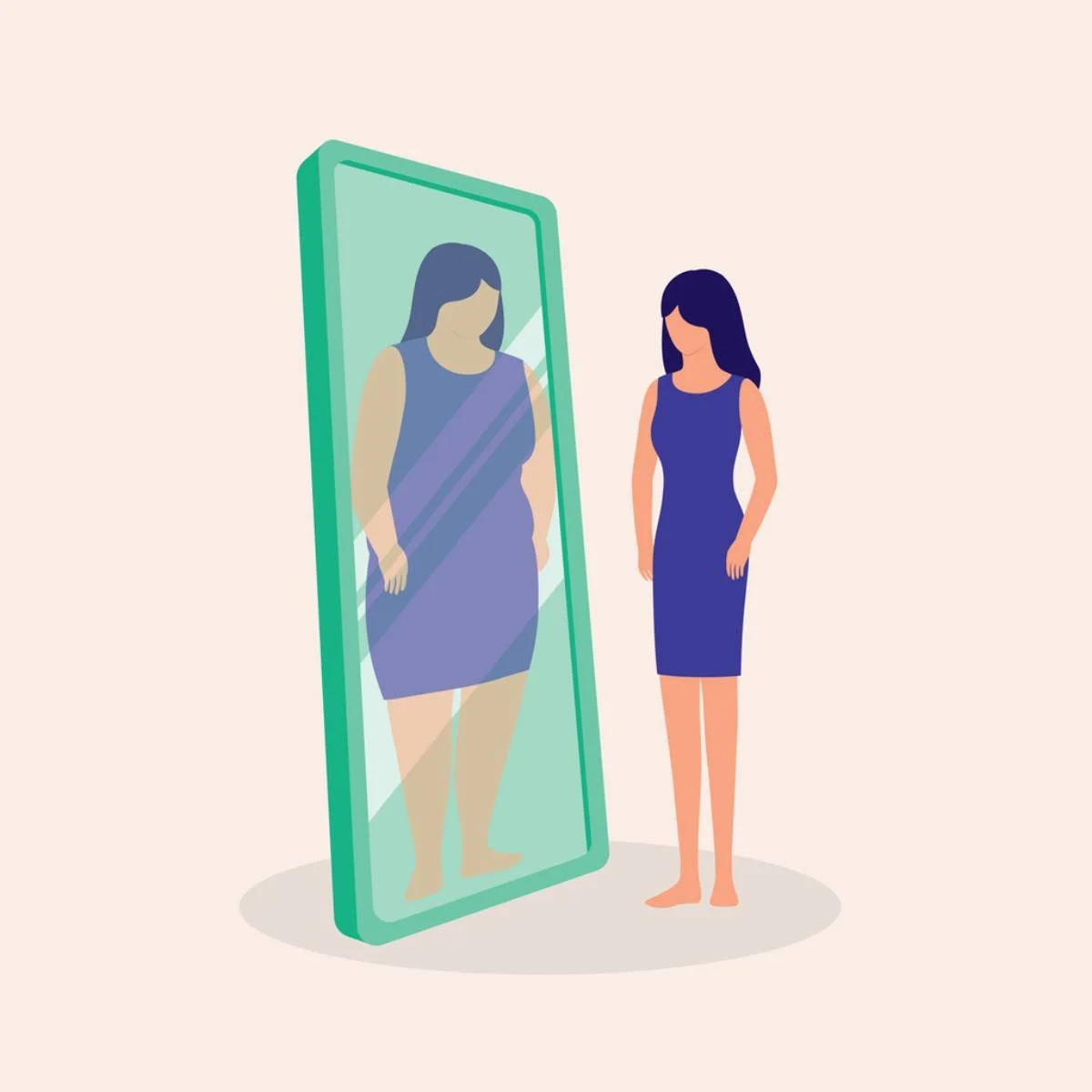
The Distorted Woman in the Mirror; A Case of Body Dysmorphic Disorder
Are you constantly scrutinizing your appearance and nitpicking every detail? I once had a client who spent hours in the mirror making sure she got her hair parted the right way to get it just right. This created a lot of anxiety for her not to mention the fact that it was time consuming often running her late for work or appointments as she wouldn’t leave her house until her hair was parted just right. The hair part just felt so wrong to her, and the whole experience was very distressing. It would make her incredibly sad, and she would feel ugly if the hair part was “off” in any way.
Body Dysmorphic Disorder is a mental health problem whereby individuals develop a fixation on an aspect of their appearance and more than likely no one else even notices what they are so preoccupied about. They are constantly checking their appearance in the mirror, going as far as avoiding social events and missing out on some much-needed fun and comparing themselves to others on a regular basis. Focusing on other skills or interests helps those with Body Dysmorphic Disorder to elevate their self-confidence and give their self-esteem a boost. Cognitive behaviour therapy is also effective in challenging those distorted thoughts that lead to a distorted and negative view of oneself transforming the thoughts into something much gentler and more positive.
Those who suffer from Body Dysmorphic Disorder suffer from an overwhelming preoccupation with their appearance which manifests in an obsessive nature followed by different rituals to alleviate the anxiety that these thoughts trigger. In the client I mentioned earlier, we saw that her hair not being parted the right way made her feel ugly and unattractive and that something was wrong which created a lot of anxiety for her which she attempted to alleviate her suffering through parting the hair just right. In more extreme examples of Body Dysmorphic Disorder, people may go to the point of having plastic surgery with the financial costs involved.
Another form of Body Dysmorphic Disorder affects those who are preoccupied with their muscular appearance and comparing themselves with those at the gym and not feeling fit and healthy enough or built enough. This type of BDD affects men more than women. They may fear doing any type of activity that is overly cardiovascular for fear that they will lose muscle mass. This distorted view of oneself can lead to a lopsided exercise program that doesn’t meet all needs, benefiting both physical and mental health.
Signs to watch out for:
Over preoccupation with perceived physical flaws manifesting itself in an obsessive nature
Constantly checking one’s appearance in the mirror
Often comparing one’s appearance to others
Having a high need for validation about appearance from others
Engaging in highly ritualized grooming sessions, often time consuming
Fear of being judged by others leading to missing out on social opportunities
A high need for cosmetic procedures which can also be costly
Selecting clothing designed to either enhance the body or conceal supposed flaws.
Feeling embarrassed about one’s appearance.
Body Dysmorphic Disorder can have serious consequences for one’s life. Missing out on opportunities to socialize, avoiding events for fear of being judged and not good enough. This extends to dating as well, avoiding any scenario where they feel they are inferior or unworthy. They may call in sick more often and miss work and school impairing their performance and functioning and compromising their academic success.
Some possible causes:
Genetics may play a role in BDD. In twin studies, genetic factors account for approximately 44% of the variance.
Traumatic history may also play a role with those who report having been bullied by others or who experienced childhood abuse having a higher incidence of BDD.
Perfectionistic types also have a higher incidence of developing BDD. A higher sensitivity to aesthetics is associated with a higher incidence of BDD.
Associated Problems: There is a higher incidence of those with BDD to also suffer from social anxiety disorder, obsessive compulsive disorder, and eating disorders.
How to cope with BDD
Effective interventions combine talk therapy and medication, and as with most issues and problems, this disorder won’t disappear on its own. Seeking the help of a qualified therapist will help you to change the distorted thinking that’s also leading to a distorted view of your body. In other cases, it may be helpful to also take medications such as SSRI’s (selective serotonin reuptake inhibitors) This is an anti-depressant and shown to be effective in 50-70% of cases and helps to manage symptoms associated with BDD and is especially effective combined with talk therapy.
Reaching out for therapy and feeling supported by others is essential to elevating your self-esteem
Practice loving kindness meditation daily if possible. Focusing on self-acceptance also enhances the acceptance you have about your body and reduces focus on supposed flaws.
Spend time with loved ones such as family or close friends and your pet
Practice breathing exercises designed to calm you down
Start writing positive affirmations in a journal or listen to them on audio
Learn a new hobby that you may find relaxing, such as knitting or playing a musical instrument. Developing a new hobby unrelated to physical appearance boosts self-esteem. Getting well and healing takes time, but it is possible with the support of friends, family, and a qualified therapist.
Developing a new hobby unrelated to physical appearance helps elevate your self esteem